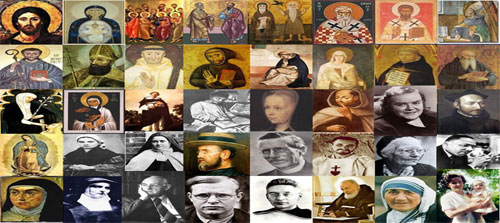
A bustling spot for the over-churched, out-churched, un-churched and maybe even the un-churchable. A location just beyond boring bitterness. A place for wannabe contemplatives, front-line world-changers and restless cranks.This issue was entitled "The Peace Issue," so I thought I'd give it a go and submit something. The piece I ended up writing focused on the idea that healthy peace activism comes out of a space of spiritual/mystical contemplation, and gave a couple examples of people who lived in that way.
Sunday, September 22, 2013
published: geez magazine, "contemplation leads to peace"
In the most recent issue of Geez Magazine (Fall 2013), you'll find an article by me called "Contemplation Leads to Peace." The full text isn't available online, but you can order a paper or digital copy online. Geez is a great magazine, whose tagline is "holy mischief in an age of fast faith." They attempt to be a magazine that appeals to people who are interested in social justice and faith, but who question some of the ways that Christianity is expressed in American culture. Here's an excerpt from their "About Us" page:
Wednesday, August 07, 2013
published: "eco-justice: the issue of our time"
Here's another article that I wrote recently, published in The Canadian Friend. It's called, "Eco-Justice: The Issue of Our Time," an issue that is incredibly important to me and one I have a growing sense of calling around. You can read my full article below, and go to The Canadian Friend website to get a PDF of the whole issue.
Friday, August 02, 2013
published: "short-term missions: evangelizing americans"
I haven't shared much about my trip to Mexico over Spring Break because I knew this article would come out eventually. I wrote a piece for Quaker Life that talks about my experience, and especially my son's experience and what it meant to me. Here's the first part of the article, and after that you have to go visit the Quaker Life site:
I went on a short-term mission trip to Mexico with my six-year-old son and about 90 other Friends from Oregon over Spring Break. I’m not always a fan of short-term mission trips, because sometimes it seems to be a lot of expense just so Americans going on the trip can have a chance to travel somewhere and feel good about themselves. However, I feel pretty good about this one. Several meetings in our area have collaborated for over 30 years to form a team fittingly called, Equipo (which means “team” in Spanish) that travels to San Luis, Mexico, to build houses every other year.
Within the last 10-12 years, Equipo created the motto, “Short-term missions with a long-term impact,” and we developed a sister-church relationship with Nueva Esperanza, a Baptist church in San Luis. Each year we pitch our tents on their “compound,” taking up most of the space they generally use for a soccer field. We worship together on...
Read more
I was the main photographer for the trip, so here's a slideshow of a bunch of pictures from the trip, most of them mine.
I went on a short-term mission trip to Mexico with my six-year-old son and about 90 other Friends from Oregon over Spring Break. I’m not always a fan of short-term mission trips, because sometimes it seems to be a lot of expense just so Americans going on the trip can have a chance to travel somewhere and feel good about themselves. However, I feel pretty good about this one. Several meetings in our area have collaborated for over 30 years to form a team fittingly called, Equipo (which means “team” in Spanish) that travels to San Luis, Mexico, to build houses every other year.
Within the last 10-12 years, Equipo created the motto, “Short-term missions with a long-term impact,” and we developed a sister-church relationship with Nueva Esperanza, a Baptist church in San Luis. Each year we pitch our tents on their “compound,” taking up most of the space they generally use for a soccer field. We worship together on...
Read more
I was the main photographer for the trip, so here's a slideshow of a bunch of pictures from the trip, most of them mine.
Wednesday, July 31, 2013
hope: part 3
In my previous two posts on hope, I wrote about hope that comes from seeing the spiritual community built by followers of God's Spirit and then Jesus across time--the Kingdom of God, the Beloved Community, those in all times and places who have seen a vision of shalom and attempted to live in it, including many Friends, and including prophets who were willing to look quite strange in order to follow the Spirit in radically peaceable ways.
Unfortunately, I don’t think there’s a way for the whole
world to actually become more like the Kingdom of God—I’m not a proponent of
the Social Gospel and its ideology of progressivism, which would have us
believe that we’re on a historical trajectory toward a world with less
injustice. In some ways this leads me to feel like all my desires for justice
are futile. It makes me want to give up hope, to just be grateful that I’m
comfortable and my needs are taken care of and not worry about anything else.
It’s so tempting to just leave it at that. The Marxist aphorism that “religion
is the opium of the people” is correct to some degree, but I would say the true
opium of the people is comfort. Perhaps it’s religion that makes us
comfortable, with the promise of a hereafter, or perhaps it’s achieving the
American dream of a decent house, car, family, disposable income. I find myself
falling more easily into this trap the older I get. I see the Baby Boomers, who
believed so passionately in fighting against war and for civil rights that it
defined their generation, and now where are they? Mainly, they’re living the
American dream, or striving toward it. It’s easy to think, “Idealism is for the
young,” and to become practical and realistic as I age, acquiring a mortgage,
kids, schedules to keep and retirement to think about.
I’m not THAT old yet (although people who
haven’t seen me for a while keep commenting on my gray streaks of late), and
I’m not yet willing to give up on idealism. Hopefully that means I will never
be too old for idealism.
Right now, I’m convicted that I don’t look “strange” enough.
This is not to say that we should go out of our way to look different, but if
someone looked at my life, comparing it to the life of other Americans, without
being able to hear or read my words, would they see much that was different?
They might see that I bike more than most Americans, that I spend more time at
my meetinghouse than the average American, that I eat fairly healthily and grow
some of my own food, and that I generally wear used clothes, but these (besides
the meetinghouse part) would not be considered particularly strange for an Oregonian.
Am I willing to make the real sacrifices that would be involved in following
any of my senses of prophetic calling fully: eating and wearing only fairly
traded and/or local food and clothing, fully refusing to support the oil
industry for which we go to war and keep whole nations in subjugation, working
actively against immigration injustices, building relationships across racial
and/or socioeconomic boundaries, standing up against the policies of war and
gun sales, refusing to pay war taxes, hosting soup kitchens….
I’m taking baby steps, but I fail all the time. I want a
community to do this stuff with—a community in this time. I see people across
time who have followed their passions and their convictions, who’ve listened to
their Inward Light, who’ve taken baby steps, failed, and built or joined a
movement. I pray for the grace to be one of those people, and for the grace of
fellow travelers.
What keeps me filled with hope? The prophetic voice of my
spiritual community across time, a heavy dose of tenacity and a refusal to let
my fears define me. I choose to keep my Center as God, my true reality the
Kingdom of God within. While I can’t create the Kingdom of God on Earth or a
perfect spiritual community in my time, I can cultivate that Kingdom in myself,
and allow it to break out into human history.
How about you? Would someone see from your actions that you
have any particular prophetic calling?
How about us as a denomination? How are we living out any
particular communal calling right now? Are we listening to the voices of the
prophets in our midst? Are we speaking truth to power with our lives first, and
then our voices? Are we oozing hope into our communities by sheer force of
meditative will? What is your part in this? Are you willing to look strange in
order to follow a prophetic calling? What do you sense that that would look
like for you?
Tuesday, July 23, 2013
hope: part 2
Time has a way of getting away from us, doesn't it? I started this "series" about three weeks ago, even though I've had all these posts written for months. That's what happens when I don't "schedule" them to post. In the spirit of this post topic, I "hope" that forthcoming posts will be more timely. In my first post on hope I shared about how, as a Christian, I know the answer to "What gives you hope?" is supposed to be, "Jesus," and that may be true to some extent, but I find incredible hope in seeing the work of Jesus and his Spirit across time, in the people and in the glimmers of the shalom Kingdom of God I see through their lives. Here's a bit about why.
Looking at the past, it’s all too easy to see why, for some, it provides the opposite of hope. Human history can seem like an endless litany of wars, political rivalries, genocides and betrayals.
And yet, there are glimmers of hope throughout history. I find my spiritual community as I learn about people who have heard and spoken about God across time. One of my favorite things about being a Bible and church history professor is rehearsing each semester the long human history of ways God has broken into human history in profound and life-changing ways. Yes, the Bible and church history have their share of recorded wars and political intrigue, legalism and petty quarrels, but they also show us a picture of a God who shows mercy, grace, righteous anger against injustice and who promises deep relationship with those who will walk in God’s ways. The prophetic and wisdom texts of the Hebrew Scriptures (Old Testament) remind us of the true center of faithfulness: acting in ways that uphold justice for the oppressed, even when it doesn’t feel like there’s any meaning to life. Jesus comes and offers the hope of the Kingdom of God here, now, and coming to fruition in new ways all the time. And in church history, right alongside the Crusades we see monks and nuns with a mystical bent like Meister Eckhart, Hildegard of Bingen, Francis and Clare of Assisi and many others who connect with God intimately and passionately, and who are called toward right action for the lowly of their society.
My more immediate spiritual community is my denomination: the Religious Society of Friends. Quaker history fills me with hope. We haven’t been a perfect denomination by any means, but at our best we are a people who seek after the Living God, who intentionally look for God and are led into situations where we see a need and work against injustice: prison reform, mental health reform, abolition, women’s suffrage, fair and healthful working conditions, fairly traded products, the list could go on. I’m so grateful for the kindred spirits I see in Friends history: ordinary people taking small steps against injustice and making a real difference in the direction of human history—ordinary people becoming prophets.
Looking at the past, it’s all too easy to see why, for some, it provides the opposite of hope. Human history can seem like an endless litany of wars, political rivalries, genocides and betrayals.
And yet, there are glimmers of hope throughout history. I find my spiritual community as I learn about people who have heard and spoken about God across time. One of my favorite things about being a Bible and church history professor is rehearsing each semester the long human history of ways God has broken into human history in profound and life-changing ways. Yes, the Bible and church history have their share of recorded wars and political intrigue, legalism and petty quarrels, but they also show us a picture of a God who shows mercy, grace, righteous anger against injustice and who promises deep relationship with those who will walk in God’s ways. The prophetic and wisdom texts of the Hebrew Scriptures (Old Testament) remind us of the true center of faithfulness: acting in ways that uphold justice for the oppressed, even when it doesn’t feel like there’s any meaning to life. Jesus comes and offers the hope of the Kingdom of God here, now, and coming to fruition in new ways all the time. And in church history, right alongside the Crusades we see monks and nuns with a mystical bent like Meister Eckhart, Hildegard of Bingen, Francis and Clare of Assisi and many others who connect with God intimately and passionately, and who are called toward right action for the lowly of their society.
My more immediate spiritual community is my denomination: the Religious Society of Friends. Quaker history fills me with hope. We haven’t been a perfect denomination by any means, but at our best we are a people who seek after the Living God, who intentionally look for God and are led into situations where we see a need and work against injustice: prison reform, mental health reform, abolition, women’s suffrage, fair and healthful working conditions, fairly traded products, the list could go on. I’m so grateful for the kindred spirits I see in Friends history: ordinary people taking small steps against injustice and making a real difference in the direction of human history—ordinary people becoming prophets.
It’s important to note that Friends often reject the first prophetic
voice(s) on any issue for a number of years, like John Woolman. But I love that
in so many cases in our history, the voice of the prophet has (eventually) been
listened to and then many Friends have joined social justice efforts.
Recently I read that the original meaning of the Hebrew word
for “prophet” had more to do with the strange actions of a person rather than
that person’s words.[1]
Prophets were people who looked different from those around them because they
were focused on the spiritual world and committed to living in that world
fully. These prophets looked strange because of their intentional, Spirit-led
actions, and only then were they given a voice to speak against the injustice
in their cultures.
But am I, are we as 21st century
Friends, willing to listen to the prophets of our time? Are we willing to BE
the prophets of our time? Prophets in the past lived in ways that showed up
injustice, calling for their society to change in ways that might require
letting go of some measure of comfort for those at the upper income levels of
their community. Are we willing to make such "sacrifices" so that justice is available to everyone the world over, not just the wealthy, not just United Statesians or people of whatever country we live in? Are we willing to help build a spiritual community, the Kingdom of God, across time and without borders?
In hope: part 3, expect to hear a bit about my own story, personal challenges and questions about holding onto and living into hope, and some queries for us all.
[1]
Goldingay, John, Old Testament Theology,
vol. 1: Israel’s Gospel, Downers Grove, IL: InterVarsity Press, 2003, p.
668.
Wednesday, July 03, 2013
hope: part 1
I recently attempted to write an article from the prompt: "What gives you hope?" I utterly failed in the attempt. It's really gotten me thinking, however, about the concept of hope. I find myself to be a fairly hope-full person. Sure, I see all the inequity in the world and all the problems, I see the insufficiencies in myself, and yet I feel so much hope each day. (Well, most days, at least.)
In some ways I feel like the kid in the following joke: A Sunday school teacher asked the class, "What's brown, furry, has a bushy tail and likes to eat nuts?" A kid tentatively raised his hand and said, "I know the answer is supposed to be 'Jesus,' but it sure sounds like a squirrel!" As an Evangelical Friend, I know the answer to "What gives you hope?" is supposed to be an unqualified, "Jesus!" And to this I say, "Yes...but...." And here's a bit of "Why." I think this will take a few posts, because otherwise you'll never read to the end!
When I began writing this article, I thought that I locate hope in history: in seeing the people who have allowed God to transform their lives in world-changing ways. As I mulled over this thought some more, I realized that what brings me hope about these people is that they provide a spiritual community that reaches across time. They whisper words of encouragement in my ear and give me courage. They cheer me on. They make me feel like I’m not crazy—although that’s debatable, since people who have been dead for hundreds or thousands of years are apparently talking to me! Despite that, I’m reminded of the passage about the “great cloud of witnesses” in Hebrews 12, following the famous chapter in Hebrews 11 that recounts the story of so many strange and misfit heroes and heroines of the faith.
In some ways I feel like the kid in the following joke: A Sunday school teacher asked the class, "What's brown, furry, has a bushy tail and likes to eat nuts?" A kid tentatively raised his hand and said, "I know the answer is supposed to be 'Jesus,' but it sure sounds like a squirrel!" As an Evangelical Friend, I know the answer to "What gives you hope?" is supposed to be an unqualified, "Jesus!" And to this I say, "Yes...but...." And here's a bit of "Why." I think this will take a few posts, because otherwise you'll never read to the end!
When I began writing this article, I thought that I locate hope in history: in seeing the people who have allowed God to transform their lives in world-changing ways. As I mulled over this thought some more, I realized that what brings me hope about these people is that they provide a spiritual community that reaches across time. They whisper words of encouragement in my ear and give me courage. They cheer me on. They make me feel like I’m not crazy—although that’s debatable, since people who have been dead for hundreds or thousands of years are apparently talking to me! Despite that, I’m reminded of the passage about the “great cloud of witnesses” in Hebrews 12, following the famous chapter in Hebrews 11 that recounts the story of so many strange and misfit heroes and heroines of the faith.
I realized that in their stories and the stories of so many
others since then, I can see that I’m not alone in yearning for the Kingdom of
God, the Beloved Community, the utopian dream of a perfect world, a “more
perfect union,” heaven on Earth, shalom.
We all see it—perhaps as if in a mirror, dimly (1 Cor 13:12), or maybe even
distorted like a carnival mirror—but we all know what it’s like to wish and
hope and dream for a better world. Some of us hold onto this hope, and some
seem to just give up, knowing it will never come and deciding it’s not worth
striving for.
I’m not trying to say the Kingdom of God will come into the
whole world in physical time and space (in any way short of the Apocalypse, if indeed
that should even be taken literally). In some ways this leads me to feel like
all my desires for justice are futile and it makes me want to give up hope, to
just be grateful that I’m comfortable and my needs are taken care of and not
worry about anything else. It’s so tempting to just leave it at that.
But Jesus said, “The Kingdom of God is within you and among
you” (Luke 17:21, Amplified Bible), and I think by living into that Kingdom,
we’re participating in a spiritual community that isn’t bound by time. By
actively seeking that Kingdom and by moving toward it, we’re allowing a portal
to open up into our world, a portal of Light and hope, a window into that
universally yearned for shalom. When
we do this, we are living in the Kingdom of God, and we are bringing that Kingdom
to others, the Inward Light of Christ pouring out into the world like a light
through a clear window on a dark night. This provides me the beginnings of hope.
Sunday, June 30, 2013
what do you do when your sunglasses break? and other ethical dilemmas
![]() |
| Elvis glasses laying around the house |
Then come the questions of waste. What do I do with the old
ones? They’re no good to anyone anymore, cracked and lens-less as they are, and
they can’t be recycled, so they go to a landfill. Did you know there’s a trash
continent in the middle of the Pacific Ocean? It’s referred to as the Great
Pacific Garbage Patch and is mainly made up of plastic debris and decomposing
bits of plastic that harm wildlife and introduce non-native species as the
plastic floats from place to place. Search for “trash continent” on
YouTube—it’s gross! And landfills are not any prettier. Worldwide and even in
the United States, studies show that landfills are disproportionately near the
communities of people of color. Americans cause a lot of waste worldwide, but
the middle-upper class white population is hardly required to face into this
waste because it’s sloughed off in minority areas or in less-developed
countries. Not only is my trash an environmental problem, but it’s also an
issue of justice that disproportionately affects minorities, the poor and those
in the “Third World.”
This leads me to the question of my own sense of
entitlement. When faced with a broken pair of sunglasses, or other cheap,
relatively disposable item, my immediate thought is that I will go out and buy
a replacement. I am not wealthy by American standards, but I do have a
comfortable income with food on the table and more than enough to cover basic
necessities. I so often act as if I’m entitled to just go to the store and
purchase whatever it is I need or want.
In fact, it’s rather convenient that I lose or break
sunglasses often, because then I can get some new ones with a higher “cool”
quotient, since sunglasses and fashion designers
ever-so-subtly-and-convincingly tell us that styles change from year to year
(or month to month), and it’s so easy to believe them. While I’m grateful for
the creativity and self-expression that some people are able to effortlessly
exude through their clothing choice, I’m also aware that fashion and being
in-style are luxuries that also have the effect of making people feel badly
about themselves. Whether we like it or not, as a society we judge people based
on appearances in so many ways, and the coolness-level of their sunglasses is
one such way.
In purchasing the latest style of sunglasses, then, in many
ways we’re telling the world, “Look at me! I have the means to buy this trendy
pair of shades. I have the level of coolness to know what’s ‘in,’ and therefore
I’m more worthy of your love than others who don’t have the economic or social
resources I do.”
Therefore, as a reminder to myself and a way to try to break
down this system that bases value on what we can afford and on how “cool” we
can convince people we are, as well as this “disposable” culture, I’m going to
try to make the commitment to wear “found” sunglasses that no one else wants,
or to buy them used. If none of these options are available, I guess I’ll have
to get used to squinting, or wear a hat!
UPDATE:
Two friends already took pity on me and donated sunglasses that they no longer use or they found and can't figure out whose they are...it's amazing what community can do!
UPDATE:
![]() |
| "New" shades from a friend |
If you’re interested, here are some sources regarding the
distribution of worldwide waste and garbage in the oceans:
Bullard, Robert D. “Poverty, Pollution and Environmental
Racism: Strategies for Building Healthy and Sustainable Communities.” Paper
presented to the National Black Environmental Justice Network (NBEJN)
Environmental Racism Forum World Summit on Sustainable Development (WSSD)
Global Forum Johannesburg, South Africa July 2, 2002. http://www.ejrc.cau.edu/PovpolEj.html
Bullard, Robert D. “BP’s Waste Management Plan Raises
Environmental Justice Concerns.” Dissident
Voice: a radical newsletter in the struggle for peace and social justice.
July 29, 2010. http://dissidentvoice.org/2010/07/bp%E2%80%99s-waste-management-plan-raises-environmental-justice-concerns/
Gorman, Steve. “Scientists study huge plastic patch in
Pacific,” Reuters, August 4, 2009. http://www.reuters.com/article/2009/08/04/us-ocean-plastics-idUSTRE5730ET20090804
Norton, Jennifer M., Steve Wing, Hester J. Lipscomb, Jay S.
Kaufman, Stephen W. Marshall, and Aitha J. Cravey. 2007. "Race, Wealth,
and Solid Waste Facilities in North Carolina." Environmental Health
Perspectives 115, no. 9: 1344-1350.Academic Search Premier,
EBSCOhost (accessed June 14, 2013).
Yandle, Tracy, and Dudley Burton. 1996. "Reexamining
Environmental Justice: A Statistical Analysis of Historical Hazardous Waste
Landfill Siting Patterns in Metropolitan Texas." Social Science
Quarterly (University Of Texas Press) 77, no. 3: 477-492. Academic
Search Premier, EBSCOhost (accessed June 14, 2013).
Katz, Eric. 1995. "Imperialism and
Environmentalism." Social Theory & Practice 21, no. 2:
271-285. Academic Search Premier, EBSCOhost (accessed June 14, 2013).
Subscribe to:
Posts (Atom)