today i've been working on a short paper about the book of mark, and thinking about why in the world he would make it seem like the kingdom of God and believing in jesus is so hush-hush! most of the time when he shows jesus healing someone he tells them not to tell anyone. and he tells parables, according to mark, so that people won't understand.
is mark doing this to explain why the jews didn't recognize jesus as the messiah? is he doing this, like the gnostics liked to think, because there is some sort of secret which was only imparted to a few people? did he write this way to dare people to look for the truth behind the parables?
it is this last that i think is true--when reading through mark lately for my class i've been struck by how curious it makes me, how i want to sit around thinking about what the parables mean (because they're not explained), how i wonder who this jesus really was and why he wouldn't want people to know him as the christ.
i think maybe mark presents it this way because he wants people to have to wrestle with discovering the truth, to think hard, to let their ears and eyes be opened with those of the blind and deaf, to be able to see and hear the truth hidden in the "good news" of jesus. what is the good news? what does it mean that God called him the son of God, that he called himself the son of man, that his apostles called him the christ, that demons called him son of God, that people called him teacher but didn't understand his teaching...
tantalizing, isn't it? (or maybe i'm just a nerd! =)
Saturday, February 11, 2006


Wednesday, February 08, 2006
hurricanes & the gulf coast
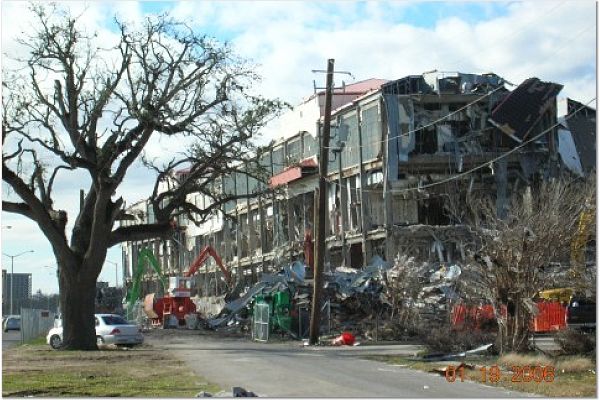
i started this blog a few days after returning from a trip to the mississippi gulf coast to do some hurricane relief work, but i think i needed the time to process what i'd experienced before i could write about it. (sometimes writing is the processing...sometimes something internal needs to happen before it can come out in text.)
anyway, i went with a group from my school and we stayed in gulf port, mississippi, just outside of biloxi. it's an area which hasn't gotten much media coverage but was hit incredibly hard by the late-summer hurricanes nonetheless. biloxi is actually on a kind of peninsula, so it was hit from three sides by 20-foot walls of water, causing flooding and an incredible amount of damage. biloxi is also the second biggest center for casino town in the usa, only after last vegas. so there were these huge casino barges just off shore, and with the wave created by the hurricane they were swept inland and took out whatever was in front of them. their steel hulls still sit on piles of wreckage, which is what the picture at the front of this post depicts. ocean water came into the center of the city at a level of about 12 feet.
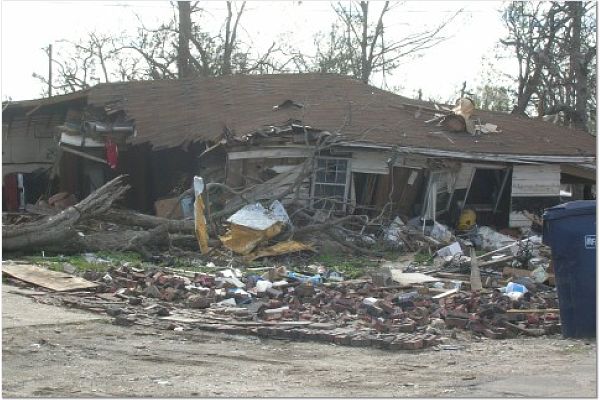
i think what struck me most about going to biloxi was that we were there five months after katrina hit, and still there was trash and people's belongings strewn through the trees. there were still houses which have not been cleaned out yet. in biloxi we saw no homes which did not look as if they had been affected by the hurricanes, although about 5 had been rebuilt. (casinos had also been rebuilt.)
another thing which we learned was that insurance companies are refusing to pay up for the loss of people's houses. most homeowners in biloxi had hurricane insurance, but did not have flood insurance (because the area had not flooded for about 100 years, and then not badly). but the insurnace companies are considering most of the damage to have been caused by the "flood." this makes me so angry!!! how can anyone with a conscience do this to people? yes, perhaps much of the damage was caused by a flood, but the flood would never have happened if not in concurrence with the hurricane!
well, we seminarians don't have a lot of actual skills where labor comes in, but we could pick up trash, pull up floors, clear debris and cut up fallen trees, and this we did. but there's still so much to do.
we worked with presbyterian disaster assistance, and they seem to be a fairly organized group. i would suggest contacting them if you feel any sort of desire to go help out in the gulf area. they have camps with "pods," which are plastic tent-type things with cots in them. they are mainly on the sites of presbyterian churches, i believe. they organize work projects for each group and organize food preparation and such for volunteers. here is their website (and a picture of the pods is on the webpage): http://www.pcusa.org/katrina/
presbyterian disaster assistance has committed to being there on the gulf for at least the next 5 years to assist with rebuilding, but of course to do this they need volunteers. the people we met in mississippi were really grateful that we were there, and i think it's a great way to show our solidarity with others who are in desperate need. of course we shouldn't just go somewhere else to help people, but it's good if we start in our own communities--but i think it's hopeful for people in mississippi to know that people all over the country still care and remember their plight. so if this starts you thinking about doing something yourself, i say go for it!
Saturday, February 04, 2006
belief-o-matic
i did a search on blogger for other posts in the last day that have the word "quaker" and i found some interesting stuff (and a bunch of stuff about quaker oats weight loss programs or something...)
anyway, one blog talked about taking a quiz on beliefnet.com where you answer 20 questions about what you believe and it guesses what religion you are. so apparently 100% of my answers matched up with baha'i, 96% liberal quaker, and 88% orthodox quaker. interesting, eh? i don't know much about baha'i, but i'll do some research for interest's sake. some of the questions were hard to answer, but it was an entertaining exercise.
anyway, one blog talked about taking a quiz on beliefnet.com where you answer 20 questions about what you believe and it guesses what religion you are. so apparently 100% of my answers matched up with baha'i, 96% liberal quaker, and 88% orthodox quaker. interesting, eh? i don't know much about baha'i, but i'll do some research for interest's sake. some of the questions were hard to answer, but it was an entertaining exercise.
prophetic voice against conquest
i read today about the spanish conquest of the americas. it got me thinking about colonization and what part in this system i've played and what i can do about it.
the spanish had an interesting perspective on colonization, because as they came over to take land and get various resources to take back to spain, their main professed goal was making the natives become christians. they had this idea of messianic providentialism (which i suppose was the precursor to manifest destiny in the english colonies), that the reason spain had discovered the americas was as God's reward to them for their faithfulness, and also an act of grace toward the "indians" to rid the americas of the evils of the tribal religions.
many, like cortes, thought it was a good idea to wage war against the native people so that they would have to be subjected to the spanish, who could then force them to become christians or die, or become slaves. here's a quote from him: "Bringing these savages as slaves, to work in the gold mines, would produce to your Majesty and the Spanish people benefits, and it might even happen that thanks to such a familiarity with us some might even be redeemed." (quoted in Must Christianity be Violent? ed. by Kenneth R. Chase & Alan Jacobs, p. 45.)
there were also some franciscan & dominican missionaries who came over and became angry with the way their compatriots were treating the native people. the most famous was bartolome de las casas, who became quite a prophetic voice for those native to the americas. he wrote a letter saying, "1. All conquests are unjust and tyrannical; 2. we have illegally usurped the kingdoms of the Indies; 3. all [slaves] are bad per se; 4. those who possess them and those who distribute them are in mortal sin; 5. the king has no more right to justify the conquests and [slaves] than the Ottoman Turk to make war against Christians; 6. all fortunes made in the Indies are iniquitous; 7. if the guilty do not make restitution, they will not be saved; 8. the Indian nations have the right, which will be theirs till doomsday, to make us just war and erase us from the face of the earth." (Ibid, p. 47-48.) although i don't agree with him about the just war part, if i did believe in just war i think the native americans have about as much right to it as anyone could.
so it's great that there were people speaking out prophetically about the evils of the conquest of the americas...but i'm white, living here in the united states, speaking english. i didn't actually take part in destroying the native americans as individuals and societies, but i live here, profiting from that destruction. is las casas correct that we are complicit in it unless we pay back everything that we have profited by these unjust actions? and at this point, how in the world would it be possible to pay it back? (of course the united states as a nation would never do this, but how would i even go about doing this personally? i don't know!)
add to that the fact that we are in the process of a new conquest of the middle east... i don't agree with that conquest and i've made that fact clear through writing my congress people and talking about what i believe and living on little enough income that i don't owe federal taxes so i'm not contributing monetarily to the war effort, but i still live here. i still live a fairly normal american life, and my vote is truly with my complacency.
another conquest based on bringing "christianity" in its political form to another country is not something i want to be part of. but how do i do anything about it? not alone, that's for sure--but how can we work together to keep our nation from making the same mistake again? how do we speak out with prophetic voices and organize for effective action?
the spanish had an interesting perspective on colonization, because as they came over to take land and get various resources to take back to spain, their main professed goal was making the natives become christians. they had this idea of messianic providentialism (which i suppose was the precursor to manifest destiny in the english colonies), that the reason spain had discovered the americas was as God's reward to them for their faithfulness, and also an act of grace toward the "indians" to rid the americas of the evils of the tribal religions.
many, like cortes, thought it was a good idea to wage war against the native people so that they would have to be subjected to the spanish, who could then force them to become christians or die, or become slaves. here's a quote from him: "Bringing these savages as slaves, to work in the gold mines, would produce to your Majesty and the Spanish people benefits, and it might even happen that thanks to such a familiarity with us some might even be redeemed." (quoted in Must Christianity be Violent? ed. by Kenneth R. Chase & Alan Jacobs, p. 45.)
there were also some franciscan & dominican missionaries who came over and became angry with the way their compatriots were treating the native people. the most famous was bartolome de las casas, who became quite a prophetic voice for those native to the americas. he wrote a letter saying, "1. All conquests are unjust and tyrannical; 2. we have illegally usurped the kingdoms of the Indies; 3. all [slaves] are bad per se; 4. those who possess them and those who distribute them are in mortal sin; 5. the king has no more right to justify the conquests and [slaves] than the Ottoman Turk to make war against Christians; 6. all fortunes made in the Indies are iniquitous; 7. if the guilty do not make restitution, they will not be saved; 8. the Indian nations have the right, which will be theirs till doomsday, to make us just war and erase us from the face of the earth." (Ibid, p. 47-48.) although i don't agree with him about the just war part, if i did believe in just war i think the native americans have about as much right to it as anyone could.
so it's great that there were people speaking out prophetically about the evils of the conquest of the americas...but i'm white, living here in the united states, speaking english. i didn't actually take part in destroying the native americans as individuals and societies, but i live here, profiting from that destruction. is las casas correct that we are complicit in it unless we pay back everything that we have profited by these unjust actions? and at this point, how in the world would it be possible to pay it back? (of course the united states as a nation would never do this, but how would i even go about doing this personally? i don't know!)
add to that the fact that we are in the process of a new conquest of the middle east... i don't agree with that conquest and i've made that fact clear through writing my congress people and talking about what i believe and living on little enough income that i don't owe federal taxes so i'm not contributing monetarily to the war effort, but i still live here. i still live a fairly normal american life, and my vote is truly with my complacency.
another conquest based on bringing "christianity" in its political form to another country is not something i want to be part of. but how do i do anything about it? not alone, that's for sure--but how can we work together to keep our nation from making the same mistake again? how do we speak out with prophetic voices and organize for effective action?
Friday, February 03, 2006
this quaker's theology
i think it is possible that this systematic theology class might be the death of me. almost every time i leave class i have an angry knot in my stomach from disagreeing so vehemently with the theology presented that i just want to rant about it for about an hour afterwards. this is probably hazardous to my health!
what's the problem, you ask? good question. this blog is an attempt to try to find voice to articulate exactly what it is about this form of theology that bothers me so much.
what it mainly boils down to is that i am realizing just how spirit-oriented quaker theology is. i mean, i knew we believe in the leading of the spirit and that the spirit is a really important piece of our theology as a whole. (it may be the only thing quakers agree on--whether you think the spirit is that of the God of jesus christ or of yourself or just a vague spirit with no specific name.) and we think of "church" and "God" in a spiritual sense, not a dogmatic or objective sense. i have known these things. and yet, to be presented with such a completely different idea boggles my mind.
i grew up in evangelical quaker circles, and although those in my yearly meeting are not your typical "evangelicals" a la george w and such, i always thought there was a fairly strong emphasis on jesus as the "Word of God," of the bible as explaining God's interaction with the world so we need it so we can recognize what's God and not God better--y'know, overall i thought my yearly meeting had a pretty high view of scripture and the person of jesus as the Son of God. but compared to the reformed tradition, we don't place much emphasis on (the historical) jesus and the bible at all.
reformed theology, at least my rudimentary understanding of it thus far, says that jesus is the Word of God incarnate--he is revelation and there is no other. although people can catch glimpses of the character of God through nature and history, the bible is our only access to the special revelation of God which is jesus christ. the holy spirit is there in the sacraments and floats around in our life to make sure that we receive salvation.
i can go along with some of this. i think jesus was the physical expression of God's Word in the world, and that the revelation of God that occurred in his life on earth is important and unique. God is revealed to people in the life and witness of jesus. we can catch glimpses of God through natural means and this view of God is always going to be kind of fuzzy, so it helps us to have the bible and tradition to help us see what God's activity in the world has looked like in the past.
but the bible is not by any means our only access to revelation. i could say that perhaps jesus is the only revelation of God to the world, in that, since he is still living and speaking to us we can come to know God through knowing him. but revelation from God occurs in my life every day, every moment (if i'm paying attention). God is present here and now, speaking to me, guiding me, teaching me. i think this is the part of God that people label the holy spirit, although it doesn't make much difference to me if we call it God, jesus, the holy spirit or whatever--the important thing is that the divine is interacting with me personally, helping me to understand things and grow, challenging me to new thoughts and more courageous actions on behalf of others, etc.
i could easily think that something else was God's spirit interacting with me, and follow that by accident. therefore it is helpful to have the bible as something to check my own perceptions against. but the bible isn't God.
further, we need the spirit to interpret everything for us anyway! if i read the bible on my own i could come to some pretty wacked out conclusions about God and how i'm to treat others. what if (like most christians until a couple hundred years ago) i looked at scripture and saw that slavery was ok, and used it to prove my own beliefs? in this case, the bible is just another book. but with the spirit there to interpret for me, i am better able to see the truths laid out in the bible and to be challenged toward right action by it.
also, if i had been alive when jesus was, would i have been able to recognize him as God by myself? no. i would still have needed the spirit to nudge something in me, to open my spiritual eyes to the truth he incarnated.
i have experiences throughout life that i think of as "spiritual" experiences, and i could not have those if not for the spirit being active in me. they would just be normal moments of my day to which i attached no significance, because my eyes had not been opened to a new truth. i would not have come to some of the conclusions i've come to if i hadn't been attending to that spirit in me.
so all the levels of "revelation" that reformed christians talk about--jesus as the ultimate revelation, seen through the lens of the bible and then proclaimed in human language, are all based on the interpretation that can only be given by the spirit. without the spirit as our interpreter, showing God to us in all these things, we would not see God. likewise, the spirit can show us God without having to use scripture, and if one never heard about jesus one could still know God.
without a direct connection with the spirit of God, how do i know i'm following the right path? let's think about it this way: i choose to be a christian and believe in the bible. why? because the church believes these things. why do i believe what the church says? because i was raised in it. why was i raised in it? because my parents were, and theirs before them, and so on back to someone who was convinced it was true. but how do i know it's true? is it only because of tradition and because that's what the bible says, and because so many people before me have believed it? if so, i don't want to be a christian! what's the point? why not be a muslim or a jew or a buddhist or an atheist?
but most christians would tell you that this is not the only reason they're a christian (if they're the kind of people who think about things). most people would say they've been convinced in some interior way that this is truth for them. they know beyond anything they can explain objectively that something has struck them as important and uniquely truthful about this person who we call jesus christ, there is a deep internal resonace with something that leads them to believe in him. the bible plays a role in this, telling the story of jesus and of other people who have interacted with this God, and there is a recognition that this is the same spirit with whom they have unconsciously interacted. i believe--or at least i hope--that this is the actual process most christians go through, and that they do not only continue to espouse christianity just because it is what has been taught by the church over the last almost 2000 years.
and yet to label it this way is too scary for most denominations. this can be too easily taken advantage of--people can say that anything comes from God and get away with it. and as we have seen, this is the danger that has faced quakerism. but if we say that the Word of God, the revelation of God to humanity, is "contained in the bible" (as one of my classmates said today), we have made for ourselves an idol of a book. and if we say that God only specifically revealed God's self to humanity through jesus as a living human, we have limited the power of God to interact in the world God created. if we suggest that God only interacts with us through a mediator we are in much more danger than simply mishearing God.
we are in danger of not hearing God--we are in danger of not listening, not waiting expectantly for God's transforming power to break into our lives. we are disallowing the power of God to once again incarnate human flesh through our own persons.
i don't know about you, but i would much rather listen for God, running the risk that sometimes i'll hear wrong and need correction from my community, than throw out the idea of trying to hear God altogether because it's too risky. yes, it's risky, yes it's scary and it's hard and it's not predictable and God might ask us to do things that do not make us comfortable. but this is what life is for! what's the point of faith in a dead god--or a god who died and rose again just to leave us?
in this case i have much more in common with a sufi (muslim) prophetess i heard about, who was walking around with a torch and a pitcher of water. when she was asked why she was carrying these things, she said it was because she wanted to set fire to heaven and douse the flames of hell so that no one would believe in God for desire for one or fear of the other. instead they would just love God because God is God, and no more reason is necessary.
if God is not present here and now, why should i be a christian? i'll never get to know God until i die anyway. but this is not the case. God is present here and now, and for the love of God i desire to live my life to its fullest capacity, loving God with all that i am and all that i do, listening to God with my full being and acting on that, even when it's hard and when the lines between God's voice and other voices are fuzzy. i desire to throw myself so completely into the passion of my love for God and God's love for me that there is room for nothing else.
this is living in revelation, this is God's living Word active in the world, this, i believe, is the message of christ.
what's the problem, you ask? good question. this blog is an attempt to try to find voice to articulate exactly what it is about this form of theology that bothers me so much.
what it mainly boils down to is that i am realizing just how spirit-oriented quaker theology is. i mean, i knew we believe in the leading of the spirit and that the spirit is a really important piece of our theology as a whole. (it may be the only thing quakers agree on--whether you think the spirit is that of the God of jesus christ or of yourself or just a vague spirit with no specific name.) and we think of "church" and "God" in a spiritual sense, not a dogmatic or objective sense. i have known these things. and yet, to be presented with such a completely different idea boggles my mind.
i grew up in evangelical quaker circles, and although those in my yearly meeting are not your typical "evangelicals" a la george w and such, i always thought there was a fairly strong emphasis on jesus as the "Word of God," of the bible as explaining God's interaction with the world so we need it so we can recognize what's God and not God better--y'know, overall i thought my yearly meeting had a pretty high view of scripture and the person of jesus as the Son of God. but compared to the reformed tradition, we don't place much emphasis on (the historical) jesus and the bible at all.
reformed theology, at least my rudimentary understanding of it thus far, says that jesus is the Word of God incarnate--he is revelation and there is no other. although people can catch glimpses of the character of God through nature and history, the bible is our only access to the special revelation of God which is jesus christ. the holy spirit is there in the sacraments and floats around in our life to make sure that we receive salvation.
i can go along with some of this. i think jesus was the physical expression of God's Word in the world, and that the revelation of God that occurred in his life on earth is important and unique. God is revealed to people in the life and witness of jesus. we can catch glimpses of God through natural means and this view of God is always going to be kind of fuzzy, so it helps us to have the bible and tradition to help us see what God's activity in the world has looked like in the past.
but the bible is not by any means our only access to revelation. i could say that perhaps jesus is the only revelation of God to the world, in that, since he is still living and speaking to us we can come to know God through knowing him. but revelation from God occurs in my life every day, every moment (if i'm paying attention). God is present here and now, speaking to me, guiding me, teaching me. i think this is the part of God that people label the holy spirit, although it doesn't make much difference to me if we call it God, jesus, the holy spirit or whatever--the important thing is that the divine is interacting with me personally, helping me to understand things and grow, challenging me to new thoughts and more courageous actions on behalf of others, etc.
i could easily think that something else was God's spirit interacting with me, and follow that by accident. therefore it is helpful to have the bible as something to check my own perceptions against. but the bible isn't God.
further, we need the spirit to interpret everything for us anyway! if i read the bible on my own i could come to some pretty wacked out conclusions about God and how i'm to treat others. what if (like most christians until a couple hundred years ago) i looked at scripture and saw that slavery was ok, and used it to prove my own beliefs? in this case, the bible is just another book. but with the spirit there to interpret for me, i am better able to see the truths laid out in the bible and to be challenged toward right action by it.
also, if i had been alive when jesus was, would i have been able to recognize him as God by myself? no. i would still have needed the spirit to nudge something in me, to open my spiritual eyes to the truth he incarnated.
i have experiences throughout life that i think of as "spiritual" experiences, and i could not have those if not for the spirit being active in me. they would just be normal moments of my day to which i attached no significance, because my eyes had not been opened to a new truth. i would not have come to some of the conclusions i've come to if i hadn't been attending to that spirit in me.
so all the levels of "revelation" that reformed christians talk about--jesus as the ultimate revelation, seen through the lens of the bible and then proclaimed in human language, are all based on the interpretation that can only be given by the spirit. without the spirit as our interpreter, showing God to us in all these things, we would not see God. likewise, the spirit can show us God without having to use scripture, and if one never heard about jesus one could still know God.
without a direct connection with the spirit of God, how do i know i'm following the right path? let's think about it this way: i choose to be a christian and believe in the bible. why? because the church believes these things. why do i believe what the church says? because i was raised in it. why was i raised in it? because my parents were, and theirs before them, and so on back to someone who was convinced it was true. but how do i know it's true? is it only because of tradition and because that's what the bible says, and because so many people before me have believed it? if so, i don't want to be a christian! what's the point? why not be a muslim or a jew or a buddhist or an atheist?
but most christians would tell you that this is not the only reason they're a christian (if they're the kind of people who think about things). most people would say they've been convinced in some interior way that this is truth for them. they know beyond anything they can explain objectively that something has struck them as important and uniquely truthful about this person who we call jesus christ, there is a deep internal resonace with something that leads them to believe in him. the bible plays a role in this, telling the story of jesus and of other people who have interacted with this God, and there is a recognition that this is the same spirit with whom they have unconsciously interacted. i believe--or at least i hope--that this is the actual process most christians go through, and that they do not only continue to espouse christianity just because it is what has been taught by the church over the last almost 2000 years.
and yet to label it this way is too scary for most denominations. this can be too easily taken advantage of--people can say that anything comes from God and get away with it. and as we have seen, this is the danger that has faced quakerism. but if we say that the Word of God, the revelation of God to humanity, is "contained in the bible" (as one of my classmates said today), we have made for ourselves an idol of a book. and if we say that God only specifically revealed God's self to humanity through jesus as a living human, we have limited the power of God to interact in the world God created. if we suggest that God only interacts with us through a mediator we are in much more danger than simply mishearing God.
we are in danger of not hearing God--we are in danger of not listening, not waiting expectantly for God's transforming power to break into our lives. we are disallowing the power of God to once again incarnate human flesh through our own persons.
i don't know about you, but i would much rather listen for God, running the risk that sometimes i'll hear wrong and need correction from my community, than throw out the idea of trying to hear God altogether because it's too risky. yes, it's risky, yes it's scary and it's hard and it's not predictable and God might ask us to do things that do not make us comfortable. but this is what life is for! what's the point of faith in a dead god--or a god who died and rose again just to leave us?
in this case i have much more in common with a sufi (muslim) prophetess i heard about, who was walking around with a torch and a pitcher of water. when she was asked why she was carrying these things, she said it was because she wanted to set fire to heaven and douse the flames of hell so that no one would believe in God for desire for one or fear of the other. instead they would just love God because God is God, and no more reason is necessary.
if God is not present here and now, why should i be a christian? i'll never get to know God until i die anyway. but this is not the case. God is present here and now, and for the love of God i desire to live my life to its fullest capacity, loving God with all that i am and all that i do, listening to God with my full being and acting on that, even when it's hard and when the lines between God's voice and other voices are fuzzy. i desire to throw myself so completely into the passion of my love for God and God's love for me that there is room for nothing else.
this is living in revelation, this is God's living Word active in the world, this, i believe, is the message of christ.
Thursday, February 02, 2006
"the grist" is awesome!
i have too much homework today to write about my theology class--that will have to wait for the weekend i guess. so i'm going to steal an article from elsewhere...
so do you all know about the grist magazine? it's an online eco-news magazine that's hilarious, and they'll deliver it free to your email account every week day if you want. go to www.grist.org.
anyway, pertinent to yesterday's post, they had a great article today about the state of the union address. i'm not sure if it's legal to post stuff that others have written without permission, but oh well--here it is:
Feds Say the Darnedest Things
Bush's quasi-bold pronouncements on oil prompt criticism, backpedaling
In his State of the Union address on Tuesday, President Bush declared that "America is addicted to oil" and that he would "make our dependence on Middle Eastern oil a thing of the past." Within 24 hours, fiasco ensued. Saudi Arabia's ambassador said he would ask Bush, ahem, "what he exactly meant by that." Oil industry lobbyists squealed; libertarians nigh fainted. Energy experts (read: the literate) pointed out that most of the R&D programs mentioned in the speech -- "clean coal," nuclear, wind, solar, etc. -- are designed to generate electricity and wouldn't have any effect on oil consumption. And to cap off the furor with appropriate absurdity, administration officials said Bush's declaration that the U.S. would cut its Middle East oil imports 75 percent by 2025 was not meant to be taken literally. It was meant to dramatize the issue in a way "every American sitting out there listening to the speech understands." So ... lies lead to understanding. We're starting to get the whole WMD thing!
so do you all know about the grist magazine? it's an online eco-news magazine that's hilarious, and they'll deliver it free to your email account every week day if you want. go to www.grist.org.
anyway, pertinent to yesterday's post, they had a great article today about the state of the union address. i'm not sure if it's legal to post stuff that others have written without permission, but oh well--here it is:
Feds Say the Darnedest Things
Bush's quasi-bold pronouncements on oil prompt criticism, backpedaling
In his State of the Union address on Tuesday, President Bush declared that "America is addicted to oil" and that he would "make our dependence on Middle Eastern oil a thing of the past." Within 24 hours, fiasco ensued. Saudi Arabia's ambassador said he would ask Bush, ahem, "what he exactly meant by that." Oil industry lobbyists squealed; libertarians nigh fainted. Energy experts (read: the literate) pointed out that most of the R&D programs mentioned in the speech -- "clean coal," nuclear, wind, solar, etc. -- are designed to generate electricity and wouldn't have any effect on oil consumption. And to cap off the furor with appropriate absurdity, administration officials said Bush's declaration that the U.S. would cut its Middle East oil imports 75 percent by 2025 was not meant to be taken literally. It was meant to dramatize the issue in a way "every American sitting out there listening to the speech understands." So ... lies lead to understanding. We're starting to get the whole WMD thing!
Wednesday, February 01, 2006
so many soap boxes, so little time...or "the state of whose union?"
i'm torn today between writing about the state of the union address last night in all its inaneity and blunder, or my ststematic theology lecture today...which i agreed with perhaps less and which distressed me perhaps more because it's not just politics, it's religion! but i think i'll save the theology soap box for tomorrow because it might not be the best policy to write while still angry. plus my prof will post his lecture for us, so i can show you quotes.
so that leaves the president...
it's amazing how one can say so many words and really say so little. and it's amazing what people will clap for. and it's amazing how with the angle of the camera you can't always tell that only half the crowd is standing...hmm...interesting. (we don't have a tv so we watched a live web feed from the whitehouse.gov website. bailey's and hot chocolate made the event much more palatable--and we also had good company.)
where to begin? i think the energy crisis. ok, so he's right--our country is addicted to oil. (that and about one other comment, that our country needs to provide affordable healthcare for everyone, were about the only things i agreed with from his speech.) so our country's addicted to oil, so we're going to cut down our dependency on foreign oil by 2025 by 75% and beef up our domestic oil production. hmm...that doesn't sound like it will solve the problem of addiction to oil, but maybe i'm missing something? it sounds to me like a not-so-veiled attempt to give an excuse for further alaskan and gulf coast oil drilling. he says cars that can run on ethanol and bio-diesel, as well as hybrids, will be made marketable in 6 years (when he's safely out of office). if that happens, excellent.
but the other solution to the energy crisis, according to bush, is "nucular" energy. so that might solve the energy crisis, but what about the environment and soil, air and water contamination and everything? this he did not address. he only addressed his mispronunciation of nuclear with the adjectives "safe" and "clean," clearly indicating their may be some doubt in other's minds as to whether this would be safe and clean.
i thought we were done talking about the social security thing, but apparently he didn't get the message when congress vetoed it. amusing when all the democrats clapped at that, though! ha!
and then there's iraq...the beginning of the speech sounded more like a "state of iraq" address than a state of our union. he says he'll cut the budget deficit in half and keep from having to tax people in the next few years while he's in office, but i'm not sure how he'll do that when he's pleaded for over $80 billion dollars to be spent on the iraq war (or whatever it's technically called). i'm not mathematician but...how exactly is that going to work?
that was pretty much my question about most of his speech: ok, sounds like an interesting idea--how do you plan to do that? yes, we need better schools, we need to show compassion to the world, we need to create a place where freedom can exist for everyone. how are you going to go about doing that, gw?
i could go on and on, but i think that's enough ranting for one day.
so that leaves the president...
it's amazing how one can say so many words and really say so little. and it's amazing what people will clap for. and it's amazing how with the angle of the camera you can't always tell that only half the crowd is standing...hmm...interesting. (we don't have a tv so we watched a live web feed from the whitehouse.gov website. bailey's and hot chocolate made the event much more palatable--and we also had good company.)
where to begin? i think the energy crisis. ok, so he's right--our country is addicted to oil. (that and about one other comment, that our country needs to provide affordable healthcare for everyone, were about the only things i agreed with from his speech.) so our country's addicted to oil, so we're going to cut down our dependency on foreign oil by 2025 by 75% and beef up our domestic oil production. hmm...that doesn't sound like it will solve the problem of addiction to oil, but maybe i'm missing something? it sounds to me like a not-so-veiled attempt to give an excuse for further alaskan and gulf coast oil drilling. he says cars that can run on ethanol and bio-diesel, as well as hybrids, will be made marketable in 6 years (when he's safely out of office). if that happens, excellent.
but the other solution to the energy crisis, according to bush, is "nucular" energy. so that might solve the energy crisis, but what about the environment and soil, air and water contamination and everything? this he did not address. he only addressed his mispronunciation of nuclear with the adjectives "safe" and "clean," clearly indicating their may be some doubt in other's minds as to whether this would be safe and clean.
i thought we were done talking about the social security thing, but apparently he didn't get the message when congress vetoed it. amusing when all the democrats clapped at that, though! ha!
and then there's iraq...the beginning of the speech sounded more like a "state of iraq" address than a state of our union. he says he'll cut the budget deficit in half and keep from having to tax people in the next few years while he's in office, but i'm not sure how he'll do that when he's pleaded for over $80 billion dollars to be spent on the iraq war (or whatever it's technically called). i'm not mathematician but...how exactly is that going to work?
that was pretty much my question about most of his speech: ok, sounds like an interesting idea--how do you plan to do that? yes, we need better schools, we need to show compassion to the world, we need to create a place where freedom can exist for everyone. how are you going to go about doing that, gw?
i could go on and on, but i think that's enough ranting for one day.
Subscribe to:
Comments (Atom)